
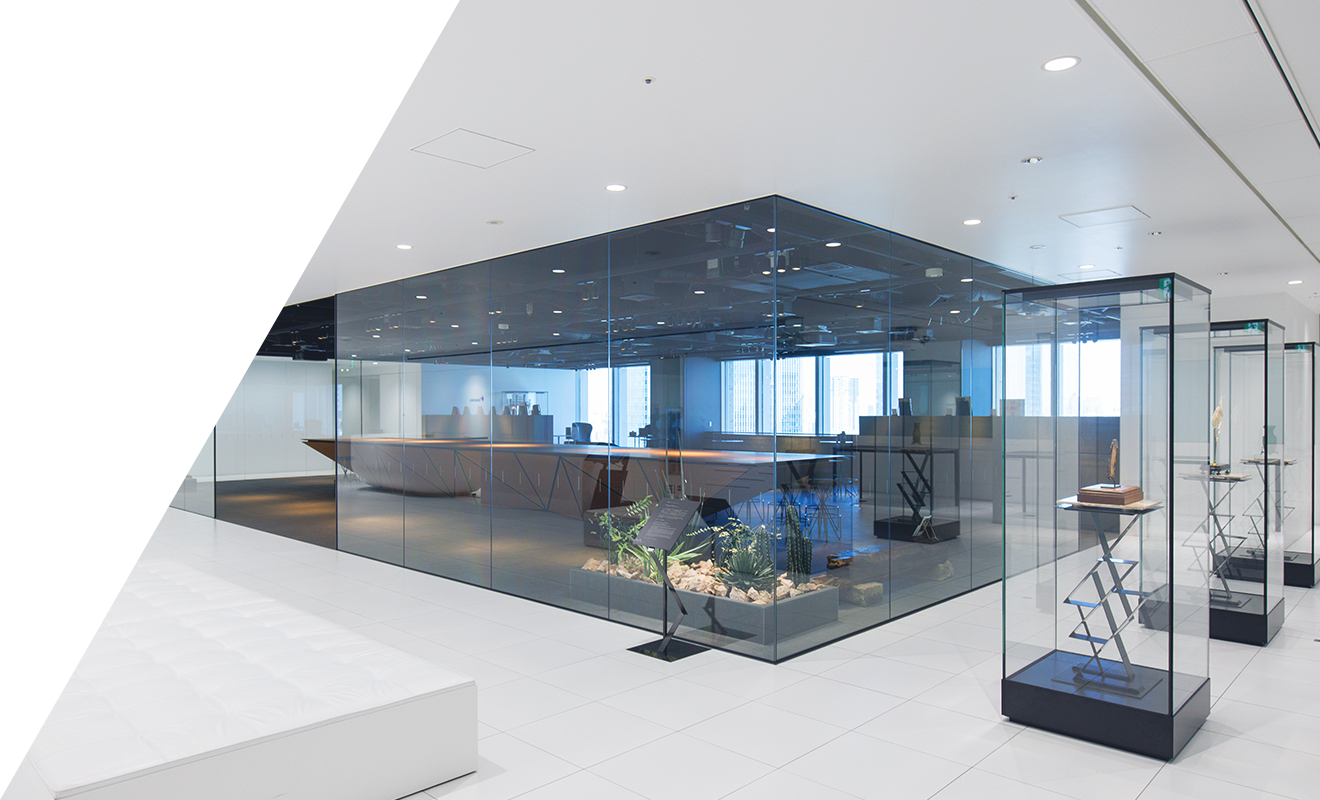




Tanseisha and point0 Co., Ltd. (hereinafter referred to as "point 0") will implement carbon offsetting (*3) of CO2 emissions (10 tons *2) from the renovation of the meeting rooms at "point 0 marunouchi," a membership-based co-working space operated by point 0, in order to achieve carbon neutrality (*1).
Through this initiative, we aim to reduce CO2 emissions associated with creating spaces and lessen our environmental impact.
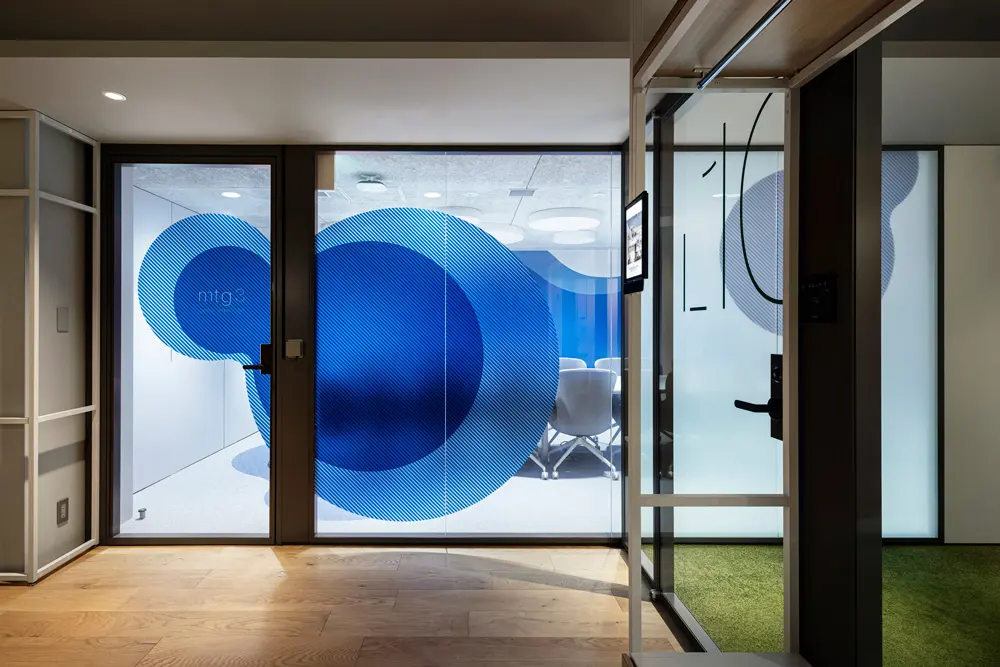
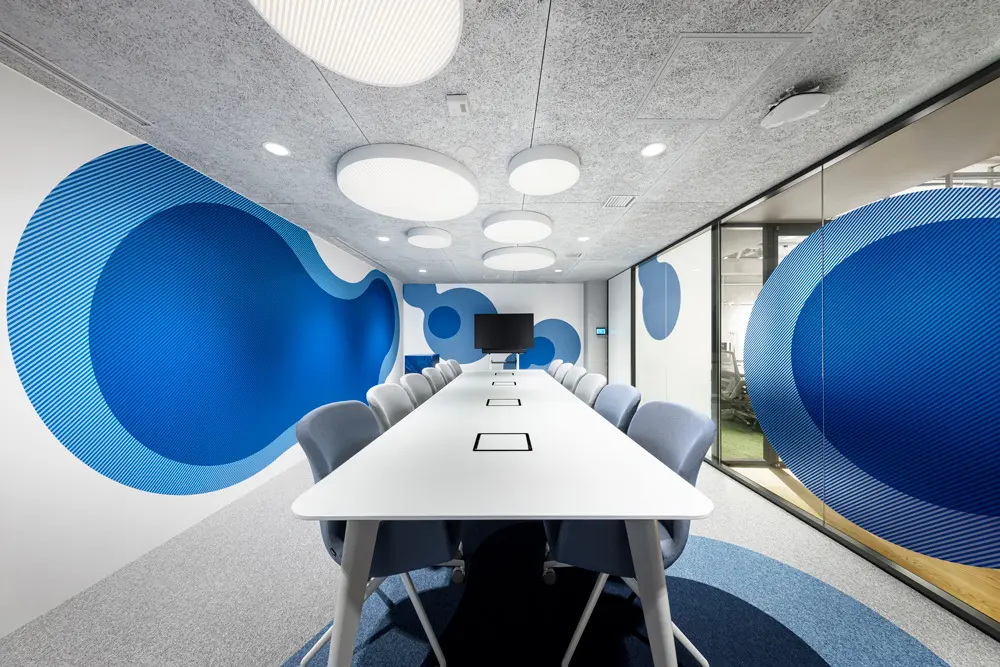
Point 0: "Carbon Offset Room" inside Marunouchi
Overview of the initiative
As part of efforts to address climate change, a global challenge, companies are increasingly taking proactive steps to achieve global carbon neutrality. Tanseisha and point 0 also endorse this initiative and are working to minimize their impact on the global environment by reducing and offsetting CO2 emissions from their activities, thereby contributing to the realization of a "decarbonized society."
In renovating the meeting rooms at "point 0 marunouchi," a coworking space designed to realize the "office space of the future," both companies aimed to achieve carbon neutrality in office space creation. This was achieved by adopting interior materials and furniture with low CO2 emissions, as well as reducing waste generated during space creation through recycling. Furthermore, by introducing "DK-CONNECT," an IoT-based air conditioning management system provided by Daikin Industries, Ltd., a participant in the "point 0 committee" consortium for co-creation, the companies will visualize the operating status of the air conditioning and contribute to reducing CO2 emissions generated in facility operations by enabling efficient operation of the air conditioning.
In addition, to further reduce our environmental impact, we implemented an offset using the J-Credit Scheme (*4) based on the CO2 emissions resulting from the renovation of the conference rooms.
Furthermore, the room's furniture includes a "side table" and a "coat hanger" that were specially designed to conform to the FSC® certification standards (*5), in line with the room's concept of "the shape of something invisible." To address the intangible challenge of "carbon neutrality," the space will be used as a platform for raising environmental awareness among facility users and for disseminating and sharing information through visible elements such as interior design and products.
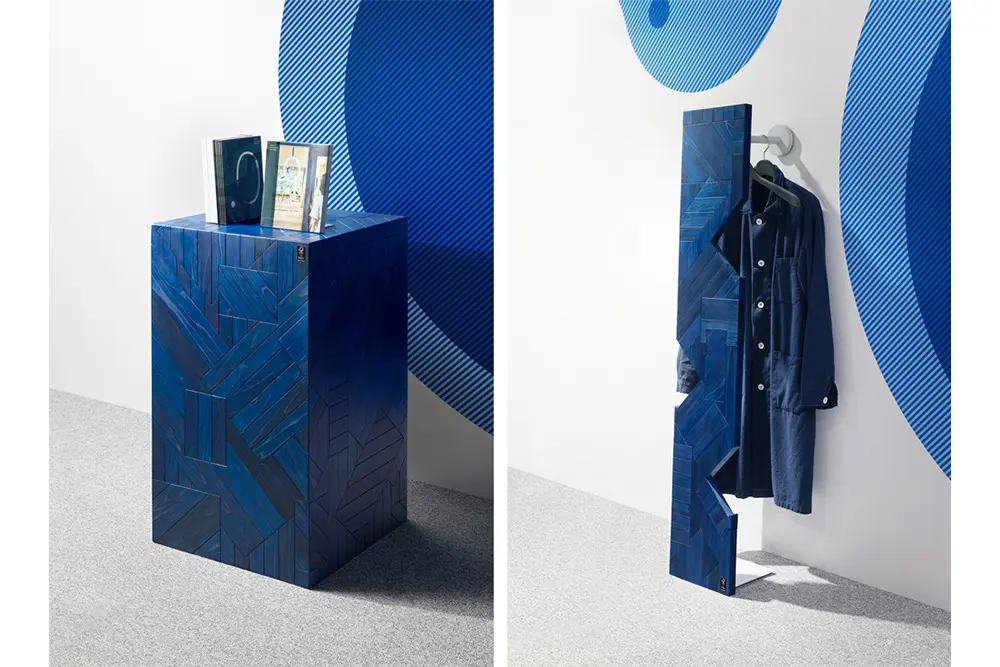
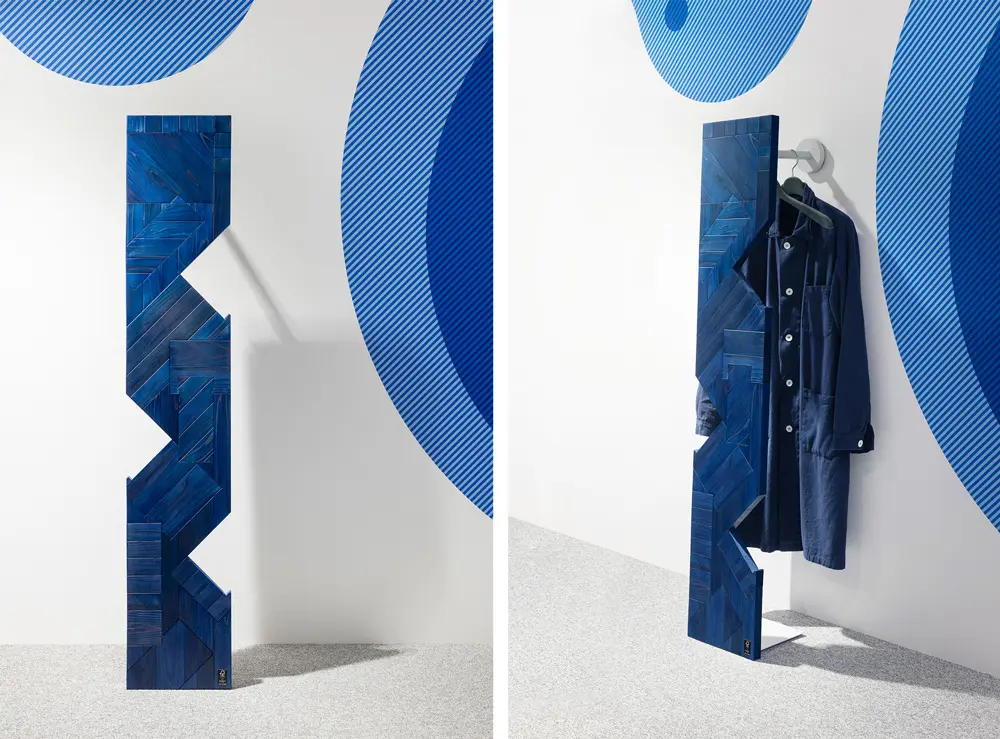
Left: Side table, Right: Coat hanger. Both are meticulously crafted using FSC® certified wood.
Future initiatives
Through the knowledge gained from implementing carbon offsetting in this conference room renovation, Tanseisha will continue to promote efforts to reduce the environmental impact of space creation and facility operation. Furthermore, we will strive to expand our initiatives in collaboration with point 0 and companies participating in the "point 0 committee."
Point 0 will continue to promote initiatives to reduce environmental impact in the renovation of existing facilities and in new facilities it will develop in the future. At the same time, it will focus on reducing environmental impact by controlling air conditioning according to the congestion and operating status of each facility it operates. Point 0 will promote co-creation by combining its accumulated facility management know-how with the expertise of the companies in the 'Point 0 Committee', and contribute to a sustainable future.
*1 Carbon neutrality: This refers to balancing greenhouse gas emissions and absorption to achieve zero overall greenhouse gas emissions.
*2 Regarding CO2 emissions: Approximately 10 tons of CO2 will be emitted during this renovation. The calculation includes emissions from raw materials to manufacturing and transportation of products procured for the renovation, as well as emissions from the renovation work itself. This is equivalent to the amount of CO2 absorbed by approximately 700 cedar trees in one year (assuming that one cedar tree absorbs 14 kg CO2 per tree per year). The emission calculation is based on values provided by suppliers and our own calculation results. For our own calculation, we use IDEA as the unit consumption database.
*3 Carbon offsetting: This concept involves first recognizing the emissions of greenhouse gases such as CO2, which are unavoidable in daily life and economic activities, making efforts to reduce emissions as much as possible, and then offsetting the greenhouse gas emissions that are unavoidable by investing in greenhouse gas reduction activities commensurate with the emissions.
*4 J-Credit Scheme: This is a system in which the government certifies the amount of greenhouse gas emissions reductions and absorptions, such as CO2, achieved through initiatives such as the introduction of energy-saving equipment and forest management, as "credits." Credits created under this scheme can be used for various purposes, such as achieving targets in low-carbon society action plans and carbon offsetting.
*5 FSC® certification: A forest certification system established by the Forest Stewardship Council, an international non-profit organization that aims to spread responsible forest management worldwide, to certify "appropriate forest management." There are two types: 'FM certification,' which reviews and certifies forest management based on 10 principles and 70 criteria that balance environmental, social, and economic aspects, and 'CoC certification,' which covers the processing and distribution processes of forest products. Tanseisha obtained "FSC-CoC certification" (FSC-C179924) at its head office in July 2022.